What Are CDW, LDW and Liability Coverage?
When you book a rental car, insurance options can quickly become confusing. You may see CDW, LDW, liability insurance, supplemental liability insurance, and other add-ons at the rental counter. Understanding the difference can help you avoid paying for protection you already have while making sure you do not leave an important gap.
For car rental insurance USA, the most important distinction is simple: CDW and LDW generally deal with damage to or theft of the rental vehicle, while liability coverage deals with injuries or property damage you cause to other people. The National Association of Insurance Commissioners (NAIC) explains that rental companies commonly offer Collision Damage Waiver, also called Loss Damage Waiver, along with liability protection.
So, are these options interchangeable? No. Each one addresses a different financial risk.
How Collision Damage Waiver Works
Collision Damage Waiver (CDW) is designed to reduce your financial responsibility for damage to the rental vehicle after a covered incident. Despite the word “waiver,” CDW is generally a contractual product rather than a traditional insurance policy. Depending on the rental agreement, it may waive some or all of the renter’s responsibility for damage or theft of the vehicle.
For example, imagine you rent a sedan and accidentally scrape it against a concrete barrier. Without suitable protection, the rental company could seek payment for covered damage and related charges. With an applicable CDW, your financial responsibility may be reduced according to the agreement.
However, CDW does not automatically cover every situation. Exclusions and conditions can apply. For instance, certain rental agreements may exclude damage caused by prohibited drivers, reckless behavior, unauthorized use, or violations of the rental terms.
Therefore, always read the rental company’s CDW terms before accepting or declining it.
The NAIC notes that drivers who already have comprehensive and collision coverage on their personal auto policy may already have protection for a rental vehicle, depending on their policy terms.
What LDW Covers on a Rental Car
Loss Damage Waiver (LDW) is closely related to CDW. In many rental situations, the two terms overlap, and the rental company may use LDW as the name for its vehicle-damage protection.
LDW can address risks involving damage or loss of the rental vehicle, including theft, depending on the agreement. In other words, the main concern is the rental car itself, rather than injuries or damage you cause to another person’s property.
The exact protection varies by rental provider. Some agreements may include additional benefits or charges, while others may have specific exclusions and deductibles.
Progressive, for example, explains that CDW/LDW is generally a contractual agreement in which the rental company accepts responsibility for certain vehicle damage or theft, subject to the terms.
That is why you should not assume that every LDW works exactly the same way.
What Liability Insurance Protects
Liability coverage works differently.
Liability insurance is primarily concerned with damage or injuries you cause to other people. It can include bodily injury liability and property damage liability. The NAIC explains that bodily injury liability addresses claims from people injured in an accident caused by the insured driver, while property damage liability can cover damage to another person’s vehicle or property.
For example, suppose you are driving a rental car and accidentally hit another vehicle. The other driver’s medical expenses could create a bodily injury claim. Damage to their vehicle could create a property damage claim.
That is where liability protection becomes important.
However, liability coverage generally does not function as protection for damage to the rental vehicle itself. That is the key difference between liability protection and CDW or LDW.
Does CDW Cover Liability?
Generally, no.
CDW and LDW focus primarily on the rental vehicle. Liability coverage focuses on claims involving other people and their property.
This distinction is important because a driver might accept CDW and assume the rental car is fully protected. However, that does not automatically mean the driver has adequate liability protection.
Likewise, purchasing liability protection does not automatically protect the rental vehicle from collision damage or theft.
Think of it this way:
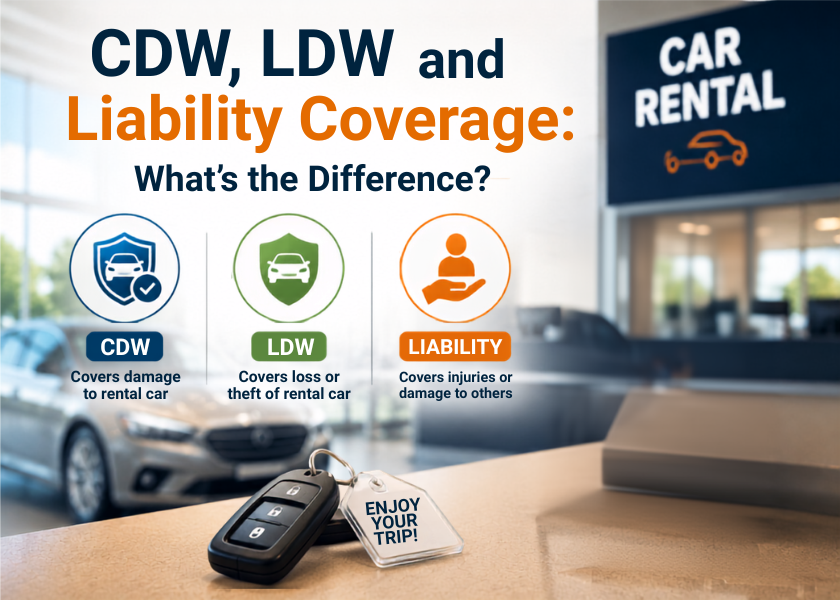
- CDW: Helps address covered damage to the rental vehicle.
- LDW: Helps address covered loss or damage involving the rental vehicle.
- Liability coverage: Helps address injuries or property damage you cause to others.
Your actual protection depends on the rental agreement, your personal auto policy, state requirements, and any other coverage you may have.
CDW vs LDW vs Liability: Key Differences
The easiest way to understand these options is to look at what each one is designed to protect.
| Coverage | Main Purpose | Protects Rental Car? | Protects Others? |
|---|---|---|---|
| CDW | Covered damage to rental vehicle | Yes | No |
| LDW | Covered loss or damage to rental vehicle | Yes | No |
| Liability | Injuries or property damage you cause | Generally no | Yes |
CDW and LDW are therefore much closer to each other than either is to liability insurance.
Still, the terms and exclusions can vary between rental companies. As a result, do not choose based on the name alone.
Do You Need Both Vehicle Protection and Liability?
Sometimes, yes.
A rental car driver can face two separate risks during the same accident. First, the rental vehicle could suffer damage. Second, another driver, passenger, pedestrian, or property owner could suffer losses because of the accident.
For example, imagine you lose control on a wet road and hit another car. Your rental car may need repairs, while the other driver may have medical bills and vehicle damage.
One type of protection does not necessarily solve both problems.
Your personal auto insurance may already extend certain coverages to rental cars. However, the limits, deductibles, exclusions, vehicle types, rental periods, and locations can vary by policy.
Therefore, check your policy before your trip rather than assuming you are covered.
Should You Buy LDW or Liability Insurance?
The answer depends on what coverage you already have.
If your existing auto policy provides appropriate coverage for rental vehicles, you may decide that purchasing the rental company’s LDW or CDW is unnecessary. However, you should confirm the details first.
If your personal policy does not provide suitable protection for rental-car damage, LDW or CDW may provide valuable protection.
Liability is a separate question. If your existing policy does not provide adequate liability protection while driving the rental vehicle, supplemental liability coverage may be worth considering.
The NAIC recommends checking your existing insurance and understanding what it covers before purchasing additional rental-car protection.
What International and Foreign Renters Should Check
Visitors renting a car in the United States should pay extra attention to liability coverage.
Insurance rules and rental requirements can vary by state and rental provider. Most states require some form of auto liability coverage, although the required amounts and rules differ.
Foreign visitors should therefore avoid assuming that travel insurance, a home-country auto policy, or a credit card automatically provides all the protection they need.
Before collecting the rental car, check:
- Whether liability coverage is included in the rental rate.
- Whether supplemental liability insurance is available.
- Whether your existing insurance applies in the United States.
- Whether your credit card offers rental-car protection.
- What the CDW or LDW excludes.
- Whether deductibles or administrative charges can apply.
- Whether additional drivers are covered.
These checks can prevent an unpleasant surprise after an accident.
How to Choose the Right Rental Protection
Start with the coverage you already have.
First, review your personal auto insurance policy. Check whether it extends to rental cars and whether both liability and physical-damage protection apply.
Next, review your credit card benefits if you plan to use a credit card for the rental. Some cards provide rental-car collision or theft benefits, but conditions and exclusions can apply. The NAIC notes that credit-card rental benefits are often secondary to other available coverage.
Then compare the rental company’s options.
Finally, consider the deductible and exclusions, not just the daily price. A cheaper option may not provide the protection you actually need.
The Bottom Line
Understanding CDW vs LDW vs liability coverage makes rental-car decisions much easier.
CDW and LDW generally focus on the rental vehicle and can reduce your financial responsibility for covered damage or loss. Liability coverage serves a different purpose by helping address injuries and property damage you cause to other people.
So, does CDW cover liability? Generally, no. And buying liability protection does not automatically cover damage to the rental car.
Before your next rental, check your existing auto insurance, credit-card benefits, the rental agreement, and applicable state requirements. Then compare the protection offered at the counter with the coverage you already have.
The goal is not simply to buy the most insurance. Instead, it is to understand your existing protection and fill genuine gaps without paying twice for the same coverage.