
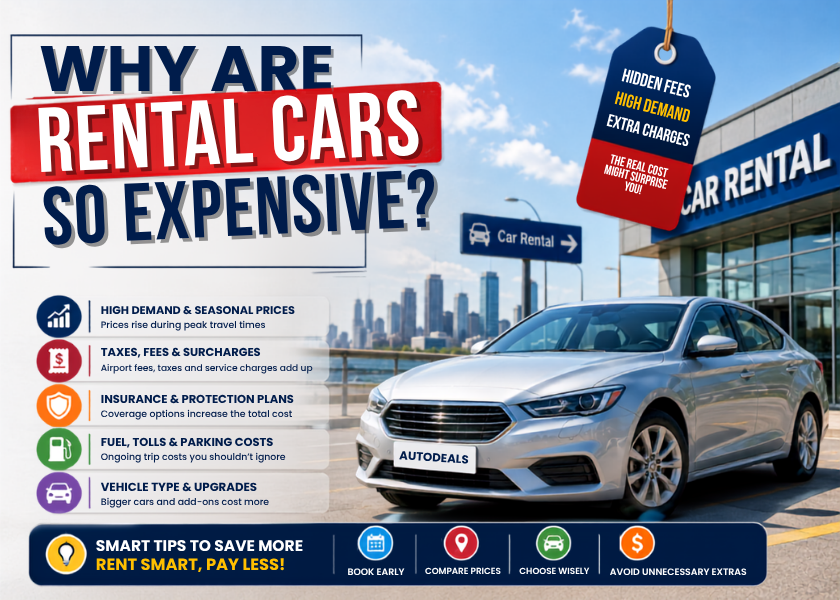
Have you tried looking for a Rental car and have felt like the rental cars’ expensive prices seemed a bit high? At first, you might think it is a low-end fee and see this as a pretty dull daily value — but the final checkout total can turn out by looking entirely different. It occurs because the base rent typically only includes the vehicle. Taxes, airport taxes, insurance, fuel social charge etc. can add up deeply to the total amount. Fortunately the way rental pricing is set up means once you understand how that works then you can make better choices and avoid many unnecessary costs.
Why Do Rental Car Prices Change So Much?
There is not a single formula for rental car pricing. Rather, rates are top-bound based on demand and availability of the vehicle (in terms of wide geographical as well as seasonal distribution) in a given location for certain booking dates.
An economy car might be on the cheaper side on a quiet weekday, while more expensive during a holiday weekend. Similarly, an SUV may be far more expensive when many families are going to the same destination;
Dynamic pricing is also the game of rental companies. Put simply, based on demand and the number of vehicles available prices all fluctuate – they can go up or down. Hence, the cost you see today might not be true tomorrow.
Demand Has a Big Impact
When many travelers need cars at the same time, rental companies have fewer vehicles available for each customer. As a result, prices can rise.
Busy periods often include:
- Summer vacation
- Spring break
- Christmas and New Year
- Thanksgiving
- Long holiday weekends
- Major sporting events
- Large conferences and festivals
Moreover, popular tourist destinations can experience sharp price increases during peak travel periods.
If your travel dates are flexible, compare several dates before booking. A small change can sometimes make a noticeable difference.
How Location Affects Car Rental Costs
The location from where you rent the car can have a significant impact on the final cost of the bill.
While the convenience of airport rental locations can be enticing, this added luxury often comes at a higher price. Concession fees, facility fees and other localizable airport costs
For example, the total for a rental car at an airport is greater than that of a similar vehicle at a local branch.
But an off-airport location is not inherently more cost effective. These include the traveling cost and the time it will take for you to reach a branch as well.
Airport Rentals Can Cost More
Travellers looking for a speedy and convenient pickup head to airport locations. Demand is still so strong rental companies can add extra charging fees.
Check the rental price at the airport compared to other branches in and around the town, especially when you are renting for more than a few days. If you can get a bit of base that costs less by grabbing a short ride to an out-of-airport area.
But you could be at the airport on your next delayed AeroFlight about to GTFO, and spending a little more there may be additionally a good idea if it avoids time and transit in Forex.
Taxes and Fees Add to the Advertised Price
One of the most common reasons a rental car appears expensive is the difference between the advertised rate and the final price.
A company may advertise a vehicle at $45 per day. However, that does not necessarily mean you will pay only $45.
Your final bill may include:
- State and local taxes
- Airport fees
- Facility charges
- Vehicle licensing fees
- Concession recovery fees
- Tourism-related charges
- Other location-specific costs
Consequently, always check the complete price before confirming a reservation.
A low headline rate does not always mean a low total cost.
Insurance Can Increase Your Rental Bill
However, insurance and protection products can also add a hefty amount to the price of your rental.
You get a few coverage options at the counter. These can cover things like collision damage, liability coverage, personal accident, and personal belonging coverage.
Vehicle prices range with each company, place and level of insurance.
But you may already be covered by your personal auto insurance or credit card. Check your current policy for its rental-car benefits before purchasing more coverage.
Some organisations may put the brakes on coverage in order to save money; don’t do it. Understanding what you are already covered for will allow you to see the gaps – that is, those risks which remain and so all this protection comes into play.
Young Driver Fees Can Make Rentals Costly
Your rental price can also be influenced by age.
All car rental firms charge extra for drivers under 25. Exact fees and rules vary by company and location.
This amount is manageable for a short rental. But with a young-driver price tag, as one might expect, a daily fee can greatly increase the overall cost of the week or longer.
That said, if you are amongst younger travelers, do check for age requirements and additional charges before comparing rental companies.
Additional Driver Charges
You could also add another driver to boost your total.
A daily charge for an extra driver is levied by some firms. Some waive you the fee depending on memberships or relationship rules.
Include them in the agreement as extra drivers when you need another person to get behind the wheel. If you let an unauthorized driver use the vehicle, you may end up with insurance and contract issues.
Car Type Changes the Rental Price
The vehicle itself has a major effect on your budget.
Economy and compact cars usually have lower rental rates. Meanwhile, midsize cars, SUVs, luxury vehicles, convertibles, and specialty vehicles generally cost more.
Your choice should match your trip.
For example, an economy car may work well for a solo traveler exploring a city. A family with several suitcases may prefer an SUV. However, choosing a larger vehicle than you actually need can increase both rental and fuel costs.
Car Type Changes the Rental Price
The actual vehicle has a huge impact on your finances.
Economy and compact cars are typically cheaper to rent. Conversely, midsize cars, SUVs, luxury vehicles and convertibles are typically pricier.
Your car you choice matches your trip.
An example are economy cars which suit a person travelling alone on city tours. An SUV may be better-suited for a family with multiple pieces of luggage. On the flip side, selecting an unnecessary larger vehicle will lead to increased costs on rentals and fuel.
Economy Cars Can Offer Better Value
If price is your main concern, start with economy or compact models.
They often have lower daily rates and better fuel efficiency. In addition, smaller vehicles can make parking easier in busy cities.
However, check the actual vehicle category rather than assuming you will receive a particular make or model. Rental companies typically reserve a vehicle class rather than one exact car.
Fuel Costs Are Easy to Overlook
Fuel is another expense that travelers often forget when calculating rental car costs.
Most rental companies provide a fuel policy. Depending on the agreement, you may need to return the vehicle with the same fuel level as when you picked it up.
Some companies also offer prepaid fuel options.
Before driving away, check the fuel level and understand the return requirements. If you choose a large SUV for a long road trip, fuel consumption can become a much bigger expense than expected.
Therefore, consider fuel efficiency when comparing vehicles, not just the daily rental rate.
Tolls and Parking Can Raise the Total
A rental car gives you freedom, but driving expenses do not stop after you pay for the vehicle.
Tolls can add up quickly if your route includes several toll roads. Rental companies may also offer electronic toll programs that come with additional service charges.
Parking presents another challenge.
Hotels, airports, downtown garages, attractions, and tourist areas may charge daily or hourly parking fees. In expensive cities, parking can become one of the largest parts of your driving budget.
Before renting, research toll routes and parking costs for your destination.
Why Luxury and SUV Rentals Cost More
Large and premium vehicles usually carry higher rental rates because they cost more to purchase, maintain, insure, and operate.
An SUV may also have higher demand among families and groups. Similarly, luxury vehicles attract customers who want premium comfort or style.
If you need extra space, an SUV may still offer good value. However, if you are traveling alone, paying for a premium vehicle may not provide enough additional value to justify the higher cost.
How to Lower Your Rental Car Bill
The good news is that you can take several steps to reduce your expenses.
Compare the Final Price
Do not compare companies based only on their advertised daily rates. Instead, compare the complete booking total.
Look at taxes, fees, insurance, mileage rules, fuel policies, and additional charges.
Check Different Pickup Locations
Compare airport branches with nearby neighborhood locations. If an off-airport branch offers a lower total, calculate your transportation cost before deciding.
Book at the Right Time
Booking too early or too late does not guarantee the cheapest rate. Instead, monitor prices and compare different dates.
If possible, check rates more than once. Rental pricing can change as availability changes.
Choose the Right Vehicle
Select the smallest vehicle that comfortably fits your passengers and luggage.
A smaller car can reduce the rental price and fuel bill at the same time.
Avoid Unnecessary Extras
GPS devices, prepaid fuel, additional equipment, premium upgrades, and other extras can increase your final cost.
Only choose services you genuinely need.
Check Existing Insurance
Review your personal insurance and credit card benefits before purchasing additional protection. Make sure you understand the coverage and exclusions first.
Is Renting a Car Still Worth It?
Despite higher prices, renting a car can still offer excellent value in many situations.
A rental car makes sense when you want to explore several destinations, travel outside major cities, take a road trip, or avoid depending on public transportation.
However, it may not be the best choice for a short city break. If parking is expensive and public transportation works well, taxis, rideshares, or trains could cost less.
Therefore, compare the total transportation cost for your entire trip rather than looking only at the rental price.
Final Thoughts
Rental car prices can seem confusing because the advertised daily rate represents only one part of the total. Demand, location, season, vehicle type, taxes, insurance, fuel, tolls, parking, and optional extras can all push the final price higher.
The best approach is simple: compare the complete cost before booking.
Start by checking multiple rental companies and pickup locations. Then, compare the vehicle categories, read the fee breakdown, review insurance options, and calculate fuel and parking expenses. Finally, remove extras you do not need.
With a little research, you can understand why rental prices rise and find an option that fits your travel budget.
For more USA car rental guides, driving tips, rental requirements, and ways to find better deals, visit AutoDeals24.com.