
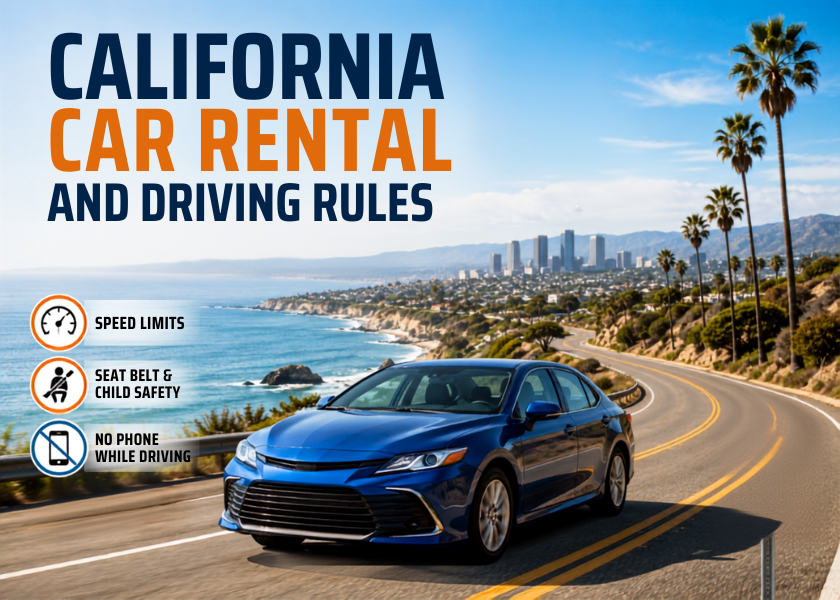
Renting a car is one of the easiest ways to explore the Golden State. A California car rental gives you the freedom to visit Los Angeles, San Francisco, San Diego, Sacramento, Palm Springs, Anaheim, and smaller coastal towns at your own pace. However, California has its own road rules, traffic habits, parking restrictions, and safety requirements. Therefore, knowing the basics before you pick up your rental car can make your trip safer and less stressful.
Whether you are visiting California for a holiday, business trip, road trip, or family vacation, take a few minutes to understand the rules below. They can help you avoid tickets, unexpected charges, and common mistakes on California roads.
Know the Basic California car rental road rules.
California follows many familiar U.S. driving practices, but visitors should still pay attention to local signs and road markings. Drivers generally travel on the right side of the road. You should also keep your rental car within the posted speed limit unless road conditions require you to drive slower.
California follows a Basic Speed Law. This means you must never drive faster than is safe for current conditions, even when the posted limit allows a higher speed. Traffic, weather, road surfaces, pedestrians, cyclists, and visibility can all affect what speed is safe.
For example, driving at the posted limit may not be appropriate during heavy rain or fog. Likewise, you should slow down when traffic becomes congested or when pedestrians and cyclists are nearby.
Typical Speed Limits to Remember
Speed limits vary according to the road and location. Unless a different limit is posted, California generally has a maximum of 65 mph on many highways. A two-lane undivided highway generally has a 55 mph limit, as do vehicles towing trailers.
Residential and business districts commonly have a 25 mph limit unless signs indicate otherwise. School areas can have lower limits under specific circumstances.
Therefore, do not rely only on a navigation app. Always check the road signs around you.
Seat Belts and Child Safety Requirements
Seat belts are mandatory for drivers and passengers in California. Everyone in the rental car should buckle up before the vehicle moves.
Child passenger rules are especially important for families renting a vehicle. California requires approved child passenger restraint systems or safety belts based on a child’s age, height, and weight.
Children under 2 years old who are under 40 pounds and under 3 feet 4 inches tall generally need to ride in a rear-facing child restraint. Children under 8 years old or shorter than 4 feet 9 inches generally need an appropriate child restraint in the rear seat, subject to specific exceptions. Children who are at least 8 years old or at least 4 feet 9 inches tall may generally use a properly secured safety belt.
If you are traveling with children, ask your rental provider about available child seats when making your reservation. Also, check the installation before starting your journey.
Put Your Phone Away While Driving
California has strict rules regarding distracted driving. Holding and using a mobile phone while driving is illegal. Adult drivers should use hands-free functionality when necessary, while minors face additional restrictions.
If you need to make a call, change your destination, or send a message, pull over somewhere safe first. You should also avoid reaching for a phone while driving.
A mounted phone can be useful for navigation, but it should not block your view. California DMV guidance also says drivers should use only a single swipe or touch on a properly mounted device.
For rental cars, this matters even more because you may already be unfamiliar with the vehicle’s controls. Set up your navigation before leaving the rental location whenever possible.
Understand California Insurance Requirements
Insurance is an important part of any rental. California requires financial responsibility for vehicles, with minimum liability coverage of $30,000 for injury or death to one person, $60,000 for injury or death to multiple people, and $15,000 for property damage.
However, do not assume that the state’s minimum requirements explain everything included with your rental.
Before accepting the keys, read the rental agreement and check what coverage the rental company provides or offers. Depending on your circumstances, your personal auto insurance, credit card benefits, travel insurance, or rental company’s optional protection may affect your coverage.
The important point is simple: know what you are covered for before you drive away.
If you already have insurance, contact your provider before your trip and ask whether your policy covers rental vehicles in California. Also check deductibles, liability limits, exclusions, and coverage for damage to the rental vehicle.
Learn California Lane and Highway Habits
California has some very busy highways, particularly around Los Angeles, San Francisco, San Diego, and other major metropolitan areas. Traffic can change quickly, so stay alert and plan your lane changes early.
On multi-lane roads, avoid unnecessary weaving. If you are driving slower than surrounding traffic, stay toward the right where appropriate. California DMV guidance also recommends moving right when another driver is behind you and wants to travel faster.
You should also watch for carpool or high-occupancy vehicle lanes. These lanes can have specific restrictions based on vehicle occupancy, time of day, and posted signs.
Before entering one, read the signs carefully. A rental car does not automatically qualify for every carpool lane.
Be Careful Around Emergency Vehicles
California requires drivers to move over and slow down for certain stopped emergency, tow, and road-work vehicles displaying required flashing warning lights.
If you see flashing lights ahead, reduce your speed and move over when it is safe and legal to do so.
This rule is easy to overlook when you are concentrating on unfamiliar roads. Therefore, keep an eye on the shoulder as well as the lanes ahead.
Pay Attention Near Schools and School Buses
School zones deserve extra attention. California requires drivers to follow posted school-zone limits and watch carefully for children, crossing guards, pedestrians, and cyclists.
When a school bus displays flashing red lights, drivers must stop from either direction and remain stopped until the children have safely crossed and the red lights stop flashing, subject to applicable roadway circumstances.
Never try to rush past a school bus because you are late for an appointment. A few extra seconds are worth far more than a traffic violation or, more importantly, putting a child at risk.
Parking Rules Can Change From Street to Street
Parking is another area where visitors often make mistakes. California cities can have different parking restrictions, so always check nearby signs before leaving your rental car.
Look for information about:
- Street-cleaning schedules
- Permit-only parking
- Metered parking
- Time restrictions
- Tow-away zones
- No-parking areas
- Loading zones
- Overnight restrictions
This becomes particularly important in popular tourist areas. A parking spot that looks available may have restrictions that are easy to miss.
When possible, use official parking garages or clearly marked public lots. Keep valuables out of sight, lock the vehicle, and take your rental agreement and personal documents with you.
Be Ready for Different California Driving Conditions
California is famous for sunny weather, but driving conditions can vary dramatically across the state.
You may encounter coastal fog near San Francisco or other coastal areas. Mountain roads can bring steep grades, sharp turns, snow, or ice during certain seasons. Desert areas can become extremely hot. Meanwhile, major cities can experience heavy traffic and sudden slowdowns.
Therefore, choose your rental vehicle according to your route. A compact car may work well for a city trip, while a larger vehicle can provide additional space for a family road trip.
Before a long drive, check the weather and road conditions. Then make sure the rental has enough fuel or charge for your planned route.
What to Check Before Leaving the Rental Location
Before starting your California road trip, inspect the rental car carefully.
Take photos or videos of existing scratches, dents, damaged wheels, cracked glass, and other visible issues. Make sure the rental company has documented them. Also check the fuel or battery level and understand the return requirements.
Next, adjust the mirrors and seat. Locate the headlights, windshield wipers, hazard lights, parking brake, and other basic controls.
Finally, connect your navigation system before leaving if possible. California’s busy roads are not the ideal place to learn how an unfamiliar dashboard works.
Common Mistakes to Avoid With a Rental Car
A few simple mistakes can turn an enjoyable trip into an expensive one.
First, do not ignore parking signs. Secondly, do not assume another driver will follow the rules. California traffic can move quickly, especially on freeways.
Also, avoid driving while distracted. Do not use a handheld phone, and do not change navigation settings while moving.
Most importantly, do not treat the posted speed limit as a target speed in every situation. California’s Basic Speed Law requires you to drive at a safe speed for the conditions.
Final Checklist
Before starting your California car rental trip:
-
Carry your driver’s license, passport, booking details, and payment card.
-
Photograph the car and record existing damage.
-
Confirm insurance, deposits, toll handling, fuel rules, and extra-driver charges.
-
Set up navigation before driving.
-
Wear seat belts on every journey.
-
Follow posted speed limits and school-zone signs.
-
Keep your phone hands-free and never text while driving.
-
Allow extra time for freeway traffic and city parking.
-
Check parking signs every time.
-
Contact the rental company immediately after a breakdown or collision.
A little preparation makes California driving much easier. Once you understand the road rules and rental conditions, you can enjoy the coast, cities, deserts, mountains, and national parks with far less stress. For available rental options and travel planning, visit AutoDeals24.