
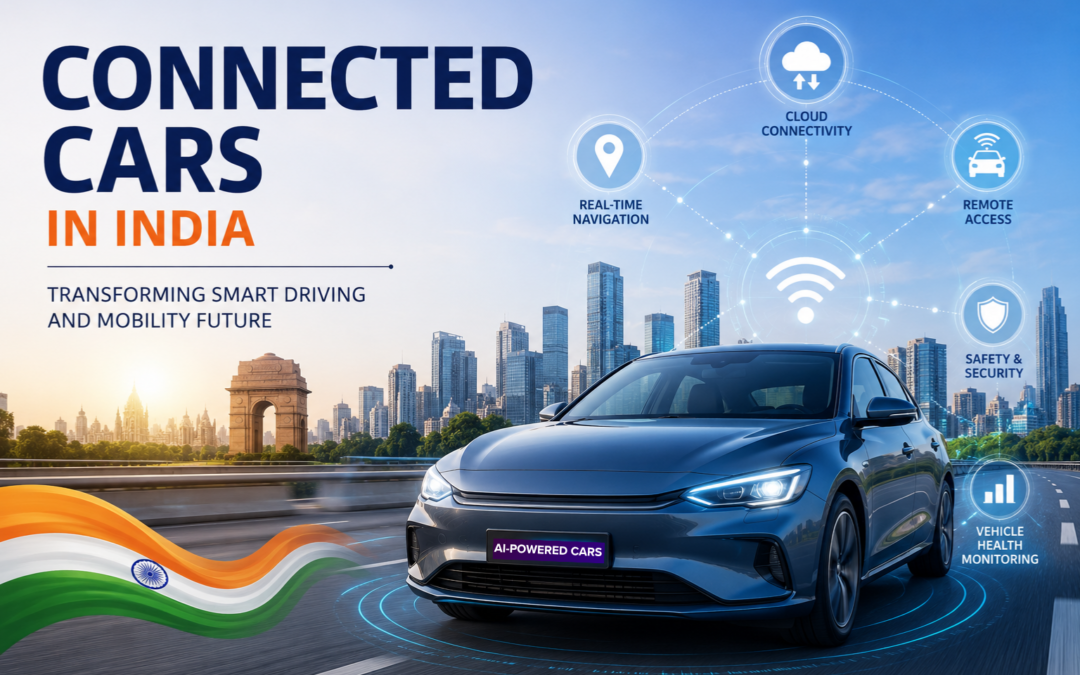
The Indian automotive sector is undergoing a swift transformation. Today, vehicles do much more than drive people between P-1 and P-2. With many modern cars able to connect to the internet, talk to smartphones and more, the vehicles have access to real-time information for drivers. This has led to connected cars in India being seen as an important element of the country’s transformation in mobility.
And with digital experiences exploding outside their cars, consumers now expect convenience and safety inside their vehicles as well. As a result, automakers are pouring capital into connected features that favour everyday driving. Connected technology is changing the way we drive, from navigation updates to remote vehicle monitoring.
What Are Connected Cars in India?
Connected Cars in India are the vehicles filed with the internet and advanced digital systems. These systems feature communication between the vehicle, driver, mobile devices, and cloud platforms.
Connected cars are able to share data in real time; traditional vehicles do not have this ability. This way, motorists will obtain useful information that increases their comfort and safety.
Key Features of Connected Cars in India
Some popular features include:
- Real-time navigation updates
- Remote vehicle tracking
- Emergency assistance services
- Over-the-air software updates
- Vehicle health monitoring
- Voice-controlled functions
- Smartphone integration
- Remote lock and unlock features
These features keep you informed and connected throughout all your trips.
How Connected Vehicle Technology Works
Connected Vehicle Technology (CVT), which is a combination of sensors, cloud computing, software, and communication networks. This vehicle never stops gathering data and relaying it to portals protected behind gates.
Components Behind Connected Vehicle Technology
The system typically includes:
- Internet-enabled control units
- GPS tracking systems
- Mobile applications
- Cloud-based platforms
- Vehicle sensors
- Wireless communication modules
Since this is the data flow between each of these components, drivers now have access to useful insights and services. In addition, the manufacturers themselves can enhance performance of the vehicle through software but with a catch.
Role of Data Connectivity
Connected vehicles are built on back-end data connectivity. This vehicle-to-everything technology allows the car to communicate effortlessly with external communications. So, the users can keep an eye on their own cars even when they are not physically there.
Benefits of Connected Cars in India
Connected cars are the present, and they have been in India for a while. Yes, connected cars are the need of the hour, but still, people love these cars because they have so many advantages.
Enhanced Safety
Safety remains one of the biggest benefits.
Key safety features include the following:
- Automatic emergency alerts
- Accident notifications
- Breakdown assistance
- Location tracking
- Driver behavior monitoring
This enables a faster driver-focussed response in emergencies.
Better Convenience
Connected vehicles simplify daily driving.
Examples include:
- Remote engine start
- Vehicle status checks
- Smart navigation
- Service reminders
- Digital key access
As a result of this, users can have more control over their vehicle.
Improved Vehicle Maintenance
Such connected systems trace down the performance of the vehicle over time.
They can:
- Detect technical issues early
- Send maintenance alerts
- Monitor battery health
- Track engine performance
As a result, this will prevent drivers from expensive repairs as well as surprise breakdowns.
Smart Cars in India and Changing Consumer Expectations
Smart Cars in India are finding themselves more and more in demand every other year in India. Consumers want cars to be seamless extensions of their digital lives.
Modern buyers look for the following:
- Connected mobile apps
- Voice assistants
- Live traffic updates
- Remote monitoring
- Smart entertainment systems
Thus, automakers are starting to add these advanced connectivity features in various segments of their vehicles.
Cheaper cars now offer tech that used to be limited to premium models This ensures that an even larger number of customers will benefit from Connected Mobility.
Internet of Things (IoT) in Cars Driving Innovation
The Internet of Things (IoT) in cars is committed to connecting vehicles on the road. IoT connects various devices and systems to communicate seamlessly.
Applications of Internet of Things (IoT) in Cars
Important applications include:
- Predictive maintenance
- Smart navigation
- Vehicle diagnostics
- Fleet management
- Real-time monitoring
IoT integration makes connected vehicles smarter and helps in better services.
In addition, the Internet of Things allows manufacturers to gather insights which help them improve their next generation designs for vehicles.
AI-Powered Cars and the Future of Mobility
Leveraging artificial intelligence is the new wave among automobile manufacturers. These days, AI-powered cars are introduced with intelligent systems that improve the driving experience.
How AI-Powered Cars Improve Driving
AI technologies support:
- Voice recognition
- Driver assistance systems
- Predictive navigation
- Personalized recommendations
- Traffic analysis
AI will take up an even larger part in autonomous vehicles as these technologies evolve.
In addition, AI improves the decision-making of drivers by analysing real-time conditions and giving useful tips.
Future of Connected Vehicles in India
The future of connected vehicles and this project too. Meanwhile, the digital receiving infrastructure in India continues to improve, and internet penetration has increased at a rapid pace.
Here are some of the trends that will determine what comes next:
- Faster 5G connectivity
- Advanced telematics
- Increased vehicle automation
- Enhanced cybersecurity
- Smart city integration
- Connected electric vehicles
As a result, connected vehicles will be an intelligent and safe vehicle for consumers.
Further, government collaborations to support digital transformation will also drive wider acceptance for connected mobility solutions.
Impact of Smart Driving Technology
Smart Driving Technology will revolutionise the transportation system by making streets safer, mitigating congestion, and contributing to the overall efficiency of driving.
Smart systems, too, will inform drivers of alerts on road conditions, weather updates and changes in traffic patterns as they travel.
Conclusion
Connected cars in India is the first step towards the future of transportation. Connected, intelligent and convenient, these vehicles redefine the driving experience.
The automotive landscape is evolving anew as connected vehicle technology continues to grow; smart cars in India are in demand, and AI-powered car adoption rises globally. Next to that, the Internet of Things (IoT) in cars and the future of connected vehicles will keep on being an impetus for advancement.
With connectivity becoming an inherent aspect, consumers across the Indian driving landscape can expect safer journeys, smarter mobility solutions and more oversight on their vehicles. Driving in the future is all connected and smart—and already beyond our grasp here today.