When you rent a vehicle, understanding rental car liability insurance can save you from an expensive surprise after an accident. Liability coverage generally helps pay for injuries to other people and damage to their property when you cause a crash. However, your personal auto policy, the rental company’s protection, and other insurance options may work differently. Therefore, it is important to know what you already have before paying for extra coverage at the rental counter.
What Is Rental Car Liability Insurance?
Rental car liability insurance protects you financially when you are responsible for an accident while driving a rental vehicle. In simple terms, it focuses on the harm you cause to other people or their property.
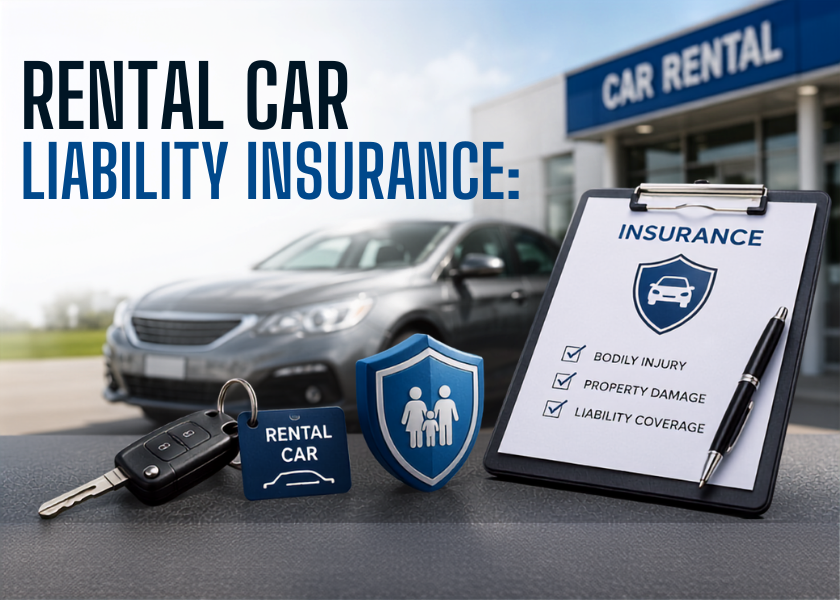
Liability coverage generally has two important parts:
- Bodily injury liability: Helps cover injuries you cause to other people.
- Property damage liability: Helps cover damage you cause to another person’s vehicle or property.
For example, imagine you rent a car and accidentally hit another vehicle at an intersection. The other driver may have medical expenses, while their vehicle may need repairs. Liability coverage can help handle eligible costs up to the applicable policy limits.
However, liability insurance does not usually cover damage to the rental vehicle itself. That protection falls under different products, such as collision damage waiver (CDW) or loss damage waiver (LDW).
The exact rules vary by state and rental agreement. The National Association of Insurance Commissioners (NAIC) notes that auto insurance requirements differ by state and that rental companies may offer separate liability and vehicle-damage protections.
How Rental Car Liability Coverage Works
Before renting a car, check whether your existing auto insurance extends to rental vehicles. Many personal auto policies provide some coverage when you drive a rental car for personal use, but the details depend on your policy.
Your coverage may follow you to a rental vehicle in some situations. Nevertheless, exclusions, limits, deductibles, vehicle types, and rental periods can affect protection.
Suppose your personal policy provides liability coverage while you drive a rental car. You may already have protection against covered claims involving injuries or property damage. In that case, buying additional liability coverage from the rental company could duplicate some of your existing protection.
On the other hand, you may have little or no personal auto insurance. If you do not own a vehicle, you should pay particular attention to the insurance options available for your rental. The NAIC also points out that people who do not own a car may consider a non-owner auto insurance policy.
Rental Company Liability Protection
Rental companies may offer liability protection as an optional product. Depending on the rental location and agreement, this protection can help cover your liability for injuries or property damage caused while using the rental vehicle.
Some rental agreements may also provide liability protection when state law requires it. However, the limits and conditions can differ significantly.
That is why you should never assume that every rental company provides the same level of protection. Instead, read the rental agreement and ask what liability limits apply to your specific reservation.
What Does Rental Car Liability Insurance Cover?
The main purpose of liability insurance is to protect against claims from other people after an accident for which you are legally responsible.
Bodily Injury Claims
If you cause an accident and another person suffers an injury, bodily injury liability may help pay eligible medical expenses and other covered damages, subject to policy limits.
For instance, a distracted driver might rear-end another vehicle. If the occupants of that vehicle suffer injuries, the driver’s liability coverage may respond to their claim.
However, liability insurance does not necessarily cover every expense or unlimited damages. Policy limits and applicable laws determine how much protection is available.
Property Damage Claims
Property damage liability can help cover damage you cause to someone else’s property.
That could include:
- Another vehicle
- A fence
- A building
- A sign
- Other damaged property
Therefore, liability protection can become especially important when an accident involves expensive vehicles or significant property damage.
What Rental Car Liability Insurance Does Not Cover
One common mistake is assuming that liability insurance covers everything related to a rental car accident.
It generally does not work that way.
Liability insurance primarily addresses your responsibility toward other people and their property. Damage to the rental vehicle itself may require separate protection.
For example, if you reverse into a concrete pillar and damage the rental car, your liability coverage generally does not pay for the rental vehicle’s physical damage. Instead, you may need collision coverage from your personal policy or a CDW/LDW purchased through the rental company.
You should also check exclusions involving unauthorized drivers, prohibited vehicle use, international travel, and other restrictions. Rental agreements can place significant responsibilities on the renter.
Supplemental Liability Insurance for Rental Cars
Supplemental liability insurance car rental coverage can provide an additional layer of liability protection beyond certain basic coverage.
It may appeal to drivers who want higher liability limits while using a rental vehicle. For example, someone concerned about a serious accident may prefer additional protection instead of relying only on minimum coverage.
However, supplemental coverage does not automatically make every risk disappear. You should understand:
- The liability limit
- Who qualifies as an insured driver
- Where the coverage applies
- What exclusions apply
- Whether the coverage is primary or secondary
- Whether your existing insurance responds first
These details matter because two policies can provide different levels of protection even when they appear similar.
Do You Need Rental Car Liability Insurance?
There is no single answer for every driver.
You may already have suitable liability protection through your personal auto insurance. However, that does not mean you should automatically decline every rental insurance option.
Consider your situation before making a decision.
Check Your Existing Auto Policy
Start by checking your declarations page or contacting your insurer. Ask specifically whether your policy covers rental vehicles.
Do not simply ask, “Am I insured?” Instead, ask questions such as:
- Does my liability coverage extend to rental cars?
- What liability limits apply?
- Does my deductible apply?
- Are there vehicle-type restrictions?
- Is coverage valid for the entire rental period?
- Does coverage apply when I travel outside my home state?
Your insurer can explain how your policy responds.
Review Your Credit Card Benefits
Some credit cards offer rental vehicle protection. However, these benefits often focus on collision or theft rather than liability.
The NAIC recommends contacting your credit card company directly to understand the available rental benefits and whether they are primary or secondary.
Therefore, never assume that a credit card’s rental protection replaces liability insurance.
Consider Your Personal Risk
Your liability limits matter. A serious accident can involve substantial medical bills and property damage.
For that reason, drivers who have low personal liability limits may want to explore additional protection. The right choice depends on the coverage already available, the rental location, the type of vehicle, and the driver’s risk tolerance.
How Much Does Rental Car Liability Insurance Cost?
The rental car liability insurance cost depends on the rental company, location, coverage limits, rental duration, and other factors.
The NAIC’s consumer guidance gives an example of supplemental rental liability insurance costing around $7 to $14 per day, although actual prices can vary.
That means a short rental may add a relatively small amount to your bill. However, the cost can become noticeable during a longer trip.
Instead of looking only at the daily price, compare the protection you receive with the coverage you already have.
Rental Car Liability Insurance vs. CDW
These two products protect against different risks.
Liability insurance generally focuses on injuries or property damage you cause to other people.
CDW or LDW generally focuses on your financial responsibility for damage or loss involving the rental vehicle, subject to the agreement’s terms.
For example, if you hit another car, liability coverage may address the other driver’s eligible damages. Meanwhile, CDW/LDW may address your responsibility for damage to the rental car.
Because they serve different purposes, one does not necessarily replace the other.
Tips Before Picking Up Your Rental Car
A few minutes of preparation can make your rental experience much easier.
First, check your insurance policy. Know your liability limits and rental coverage before arriving at the counter.
Next, review the rental agreement. Pay attention to insurance, authorized drivers, prohibited uses, deductibles, and reporting requirements.
Then, check your credit card benefits. Confirm exactly what the card covers rather than relying on general assumptions.
Also, compare coverage limits. A cheaper option may provide less protection.
Finally, keep documentation. Save your insurance information, rental agreement, and confirmation details until the rental and any related claims are completely resolved.
What Drivers Should Remember
Rental car insurance can seem confusing because several different protections may apply at the same time. However, the basic idea is straightforward: liability insurance is designed to protect you when you are legally responsible for injuries or property damage involving other people.
Your personal auto policy may already provide rental liability coverage. Alternatively, you may need protection from the rental company or another insurance provider. Your credit card may also provide certain benefits, although those benefits often have specific limitations.
Most importantly, do not make your decision based only on the price shown at the rental counter. Instead, compare the coverage you already have with the protection being offered.
Before your next trip, review your policy, understand your liability limits, and read the rental agreement carefully. That simple preparation can help you choose coverage with greater confidence and avoid paying for protection you may already have—or discovering too late that you needed additional coverage.